
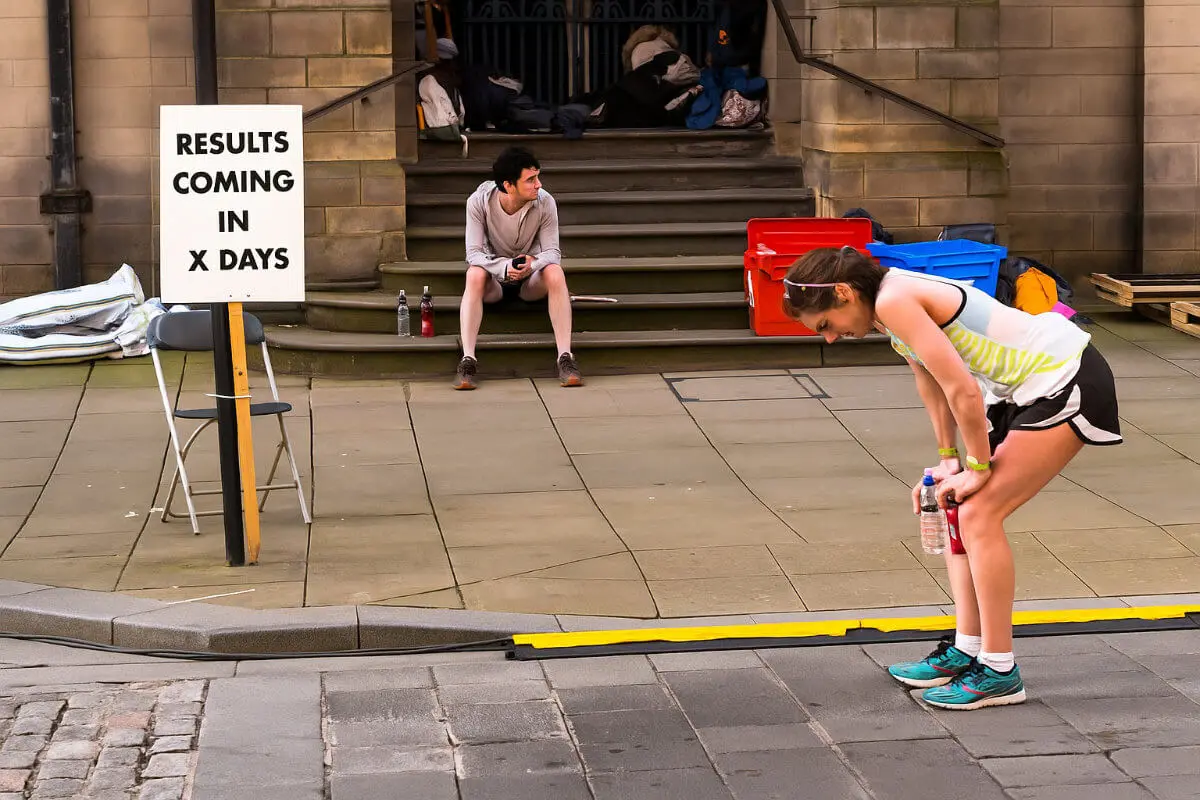
Ever noticed how some workouts have you feeling stronger in just a few days, while others take weeks before you notice a difference? That’s because your cardio-respiratory system, muscles, and nervous system each adapt at their own pace. Since different workouts target different systems in your body, the time it takes to see results can vary a lot.
So, let’s dig into the main types of workouts, what’s actually changing inside your body, and how soon you can expect to see those changes.
1. Speed Development Workouts
Speed development workouts train your nervous system, improving how effectively your brain communicates with your muscles. This allows you to recruit more muscle fibers and fire them more forcefully.
These sessions aren’t the lung-burning intervals many runners picture. Instead, they involve short, explosive efforts with full recovery, such as:
- Hill sprints
- Strides
- 200m repeats with full rest (like sprinters do)
Because your nervous system adapts quickly, you can begin to reap the benefits within 1–3 days. This quick neural response is also what underlies the benefits of dynamic warm-ups and pre-race strides.
2. VO₂ Max & Hill Workouts
VO₂ max and hill workouts target your anaerobic capacity and muscular strength. These sessions push your body to work in oxygen debt, which takes a heavier toll and requires a longer recovery period.
You’ll typically see improvements 9–15 days after these workouts, depending on intensity:
- Hard effort: 12–15 days
- Medium effort: 9–11 days

It’s normal to feel sluggish for up to a week after a tough hill or VO₂ max session. That’s simply your body repairing itself and adapting to the stress
3. Threshold Runs
Threshold, tempo, and marathon-pace runs train your body to clear and reuse lactate more efficiently, delaying the onset of fatigue and allowing you to maintain faster paces for extended periods. These workouts target your lactate threshold—the intensity just below where lactic acid accumulates rapidly—making them essential for improving endurance and sustained speed.
While demanding, they’re not as taxing on the nervous system as VO₂ max workouts, so performance gains tend to appear sooner:
- Hard effort: 10–12 days
- Medium effort: 7–10 days
4. Long Runs
Long runs are the backbone of building endurance. They trigger powerful aerobic adaptations - boosting mitochondrial density, expanding capillary networks, and improving your body’s ability to deliver oxygen to working muscles. The payoff? More energy production over longer distances, allowing you to run farther with less fatigue.
But here’s the catch: these changes take time. Your body has to literally grow new blood vessels, build more energy-producing mitochondria, and fine-tune oxygen-processing enzymes - complex biological projects that can’t be rushed. That’s why, even though your long runs are making you fitter with every step, it can take 4–6 weeks before you feel the results, especially if you’re already a seasoned runner.
Here’s a quick chart showing how long it usually takes to feel the benefits from each type of training:
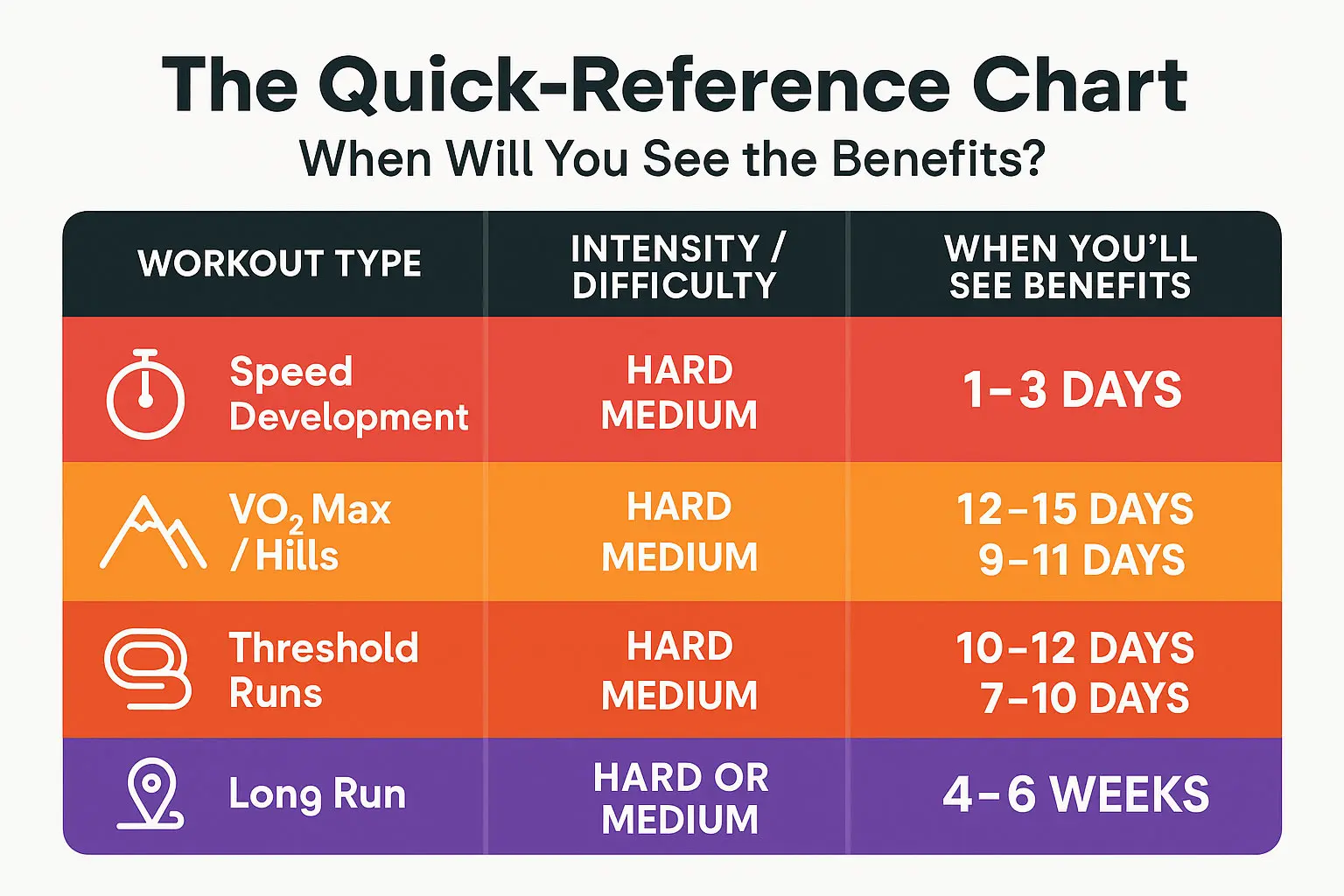
Looking at these numbers, it’s easy to see why runners talk about the “10-day rule” for adaptation — but, as mentioned above, it’s not a hard-and-fast law. For example, long, demanding runs require much more time for your body to fully adapt to the changes they set in motion.
FINAL WORD
When planning your training, use these timelines to hit peak performance on race day while avoiding overtraining. For example, a VO₂ max workout too close to race day could leave you flat, but a speed development session might give you that final boost.
Want to learn more about threshold, long runs, and other key training types? Check out our Training Paces Explained guide here.