
It usually happens without warning. One mile you’re fighting your own breath; the next, the friction of the run dissolves. Your stride steadies, the mental chatter goes quiet, and a profound sense of euphoria takes over. It’s the legendary runner’s high—a state of mind athletes have chased for generations. Yet, for all the miles logged in pursuit of it, science spent decades completely misunderstanding the chemistry behind the magic.

The Endorphin Myth
For years, the runner's high was blamed entirely on endorphins — the body's natural painkillers, released during exercise to dull the discomfort of sustained effort. It was a tidy explanation, and it stuck. The only problem is that endorphins are large molecules that can't cross the blood-brain barrier. They flood the bloodstream during a run, but they can't actually reach the brain in meaningful quantities. They're numbing the muscles, not elevating the mood.
The endorphin story wasn't completely wrong — it just wasn't the whole picture.
Enter the Endocannabinoids
In 2021, a landmark study published in the journal Psychoneuroendocrinology pointed researchers toward a more convincing culprit: endocannabinoids. Specifically, a molecule called anandamide — named, appropriately enough, from the Sanskrit word for bliss.
Endocannabinoids are small enough to cross the blood-brain barrier, and the body produces them in significantly higher quantities during aerobic exercise. They bind to the same receptors as cannabis, which goes some way to explaining the slightly dreamy, frictionless quality of a good long run. The calm focus. The reduced anxiety. The sense that problems feel somehow smaller than they did at the start.
It turns out the runner's high is, chemically speaking, closer to a mild cannabis effect than anything else. Which is either surprising or makes complete sense, depending on how many long runs you've done.
Dopamine, Serotonin, and the Mood Shift
Endocannabinoids get the headlines, but they're not working alone. Running triggers a broader neurochemical response that explains why regular runners often report improvements in mood, sleep, and anxiety that extend well beyond the run itself.
Dopamine — the brain's reward chemical — is released during and after exercise, reinforcing the behaviour and creating the motivation to lace up again tomorrow. It's why running can become genuinely addictive in a way that other forms of exercise sometimes don't.
Serotonin levels rise with sustained aerobic activity, which partly explains why running is regularly prescribed alongside — or even instead of — medication for mild to moderate depression. The effect isn't immediate, but it accumulates with consistency.
Norepinephrine sharpens focus and alertness during a run, which is why many runners report that their best thinking happens on their feet. Problems that felt tangled before a run often feel clearer somewhere around mile three.
Your Brain on Running
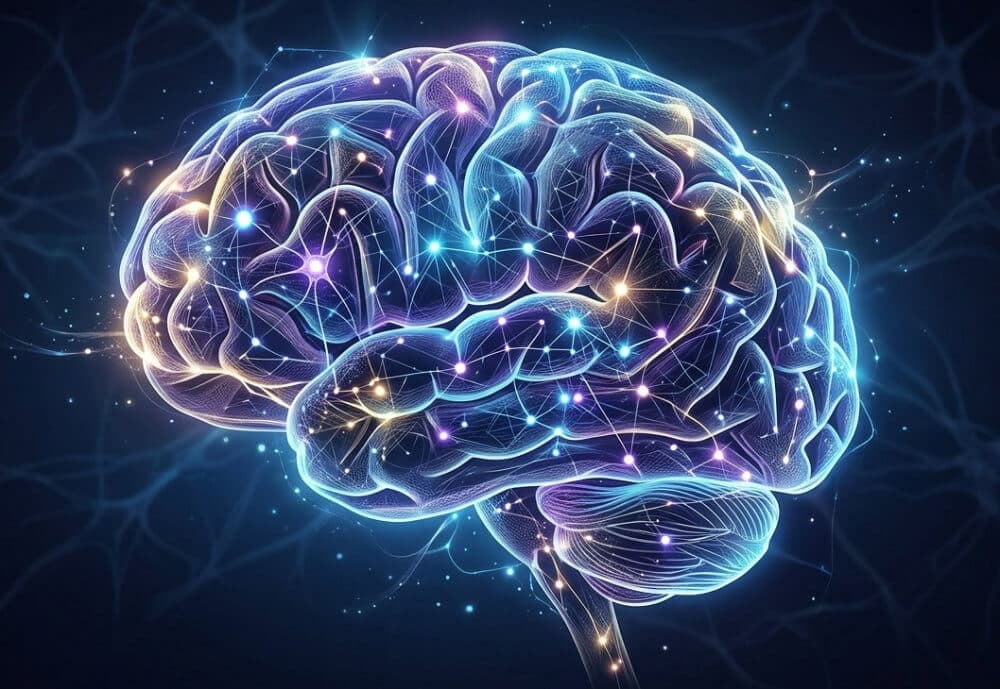
More neurons, more connections, more resilience — one run at a time
Perhaps the most remarkable finding in exercise neuroscience is the effect of running on BDNF — Brain-Derived Neurotrophic Factor. Often described as fertiliser for the brain, BDNF promotes the growth of new neurons, strengthens existing neural connections, and plays a significant role in memory, learning, and cognitive resilience.
Aerobic exercise is one of the most effective ways to raise BDNF levels. Studies have consistently linked regular running with a larger hippocampus — the region of the brain associated with memory and spatial navigation — and with a measurably reduced risk of cognitive decline in later life.
In simple terms: running doesn't just make you feel better today. It appears to make your brain more resilient for decades to come.
How Long Does It Take?
The endocannabinoid response tends to kick in after a sustained period of moderate-intensity aerobic exercise. This is one reason short, sharp runs often feel like pure effort while longer, steadier ones tip over into something more enjoyable. The brain needs time to get involved.
Pace matters too. Research suggests the sweet spot for triggering the runner's high is moderate intensity — roughly conversational pace, or around 70% of maximum heart rate. Too slow and the stimulus isn't sufficient. Too fast and the body prioritises stress hormones over the good stuff.
FINAL WORD
The runner's high is real, it's measurable, and it's more interesting than anyone gave it credit for. It's not just endorphins masking discomfort — it's a cascade of neurochemical responses that calm anxiety, sharpen focus, elevate mood, and quietly build a more resilient brain over time.
Which means every run is doing two jobs simultaneously. It's training the body you can see in the mirror, and it's building the one between your ears.
That's a decent return.